Argonaut Website & CMS
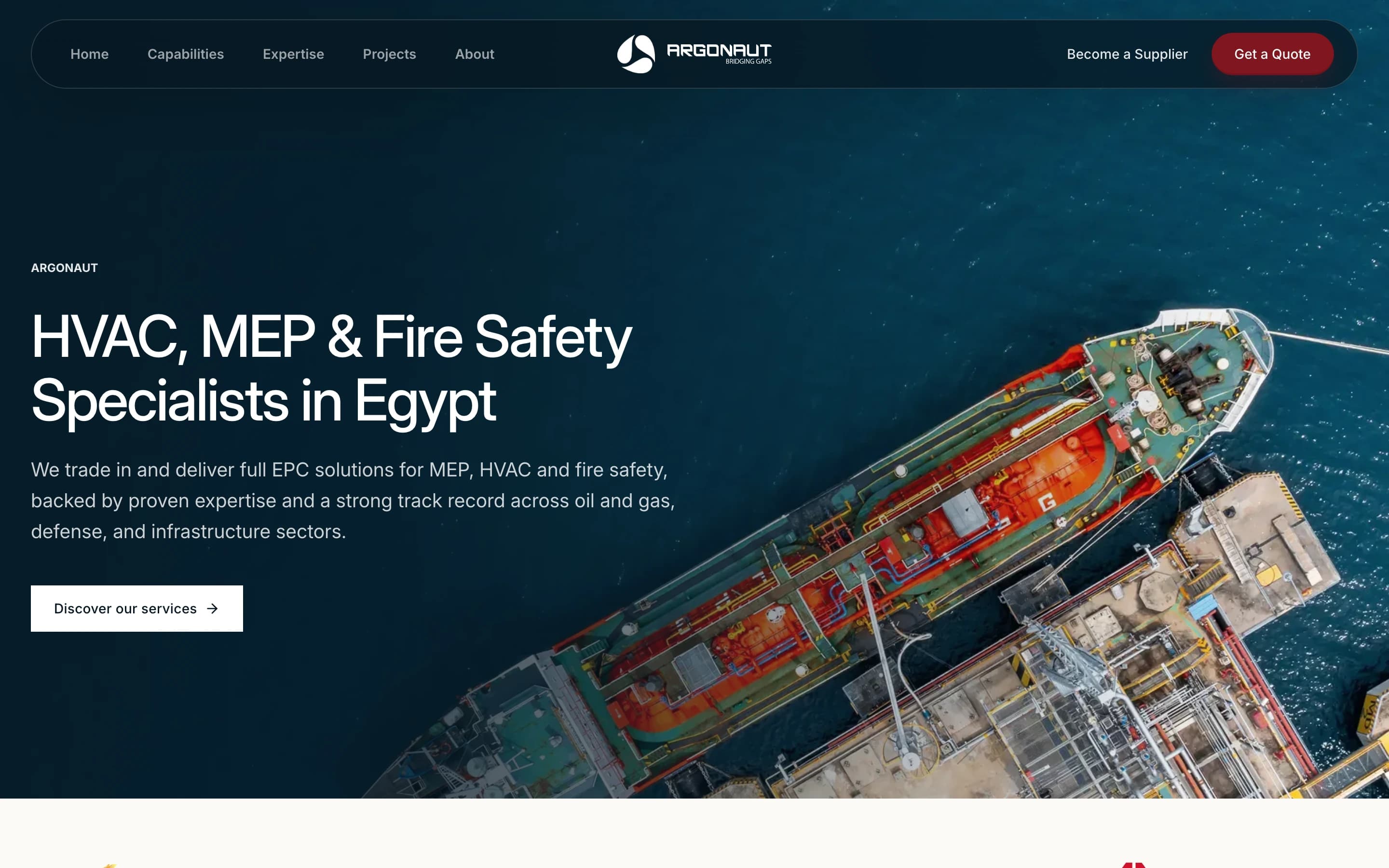
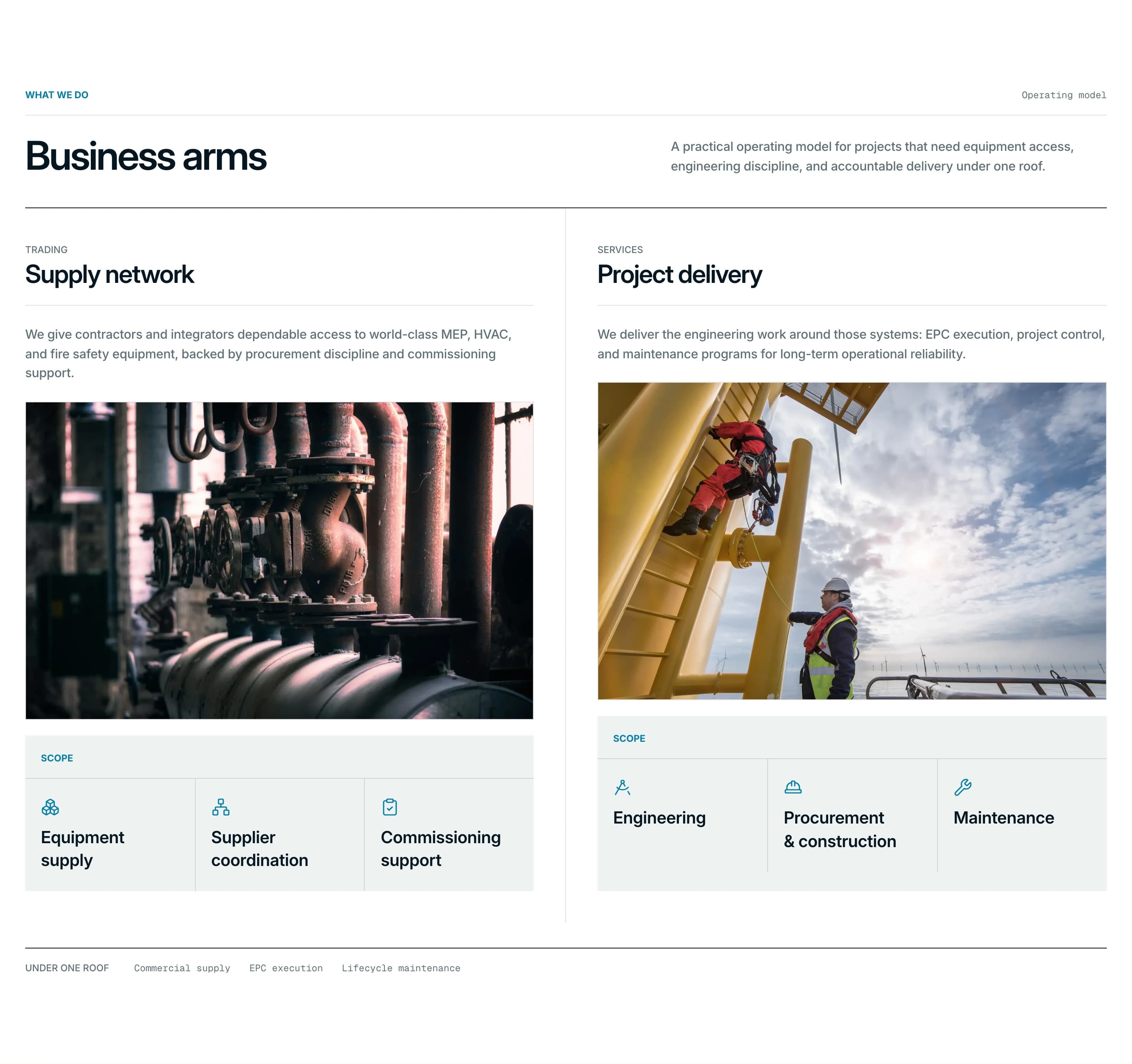
Argonaut is an Egyptian EPC contractor and equipment trader working across HVAC, MEP, and fire safety. I designed and built their public site and the CMS behind it, so a non-technical team can run their own content without a developer in the loop.
- Role
- Design and engineering
- Period
- 2025 – 2026
- Stack
- Node.js, Postgres, Prisma, Better Auth, AWS S3, Resend, Turborepo, Vercel, TypeScript, Next.js, React, Tailwind, Radix UI, Motion, Tiptap, TanStack Query, Figma
- Site
- argonaut.com.eg
Context#
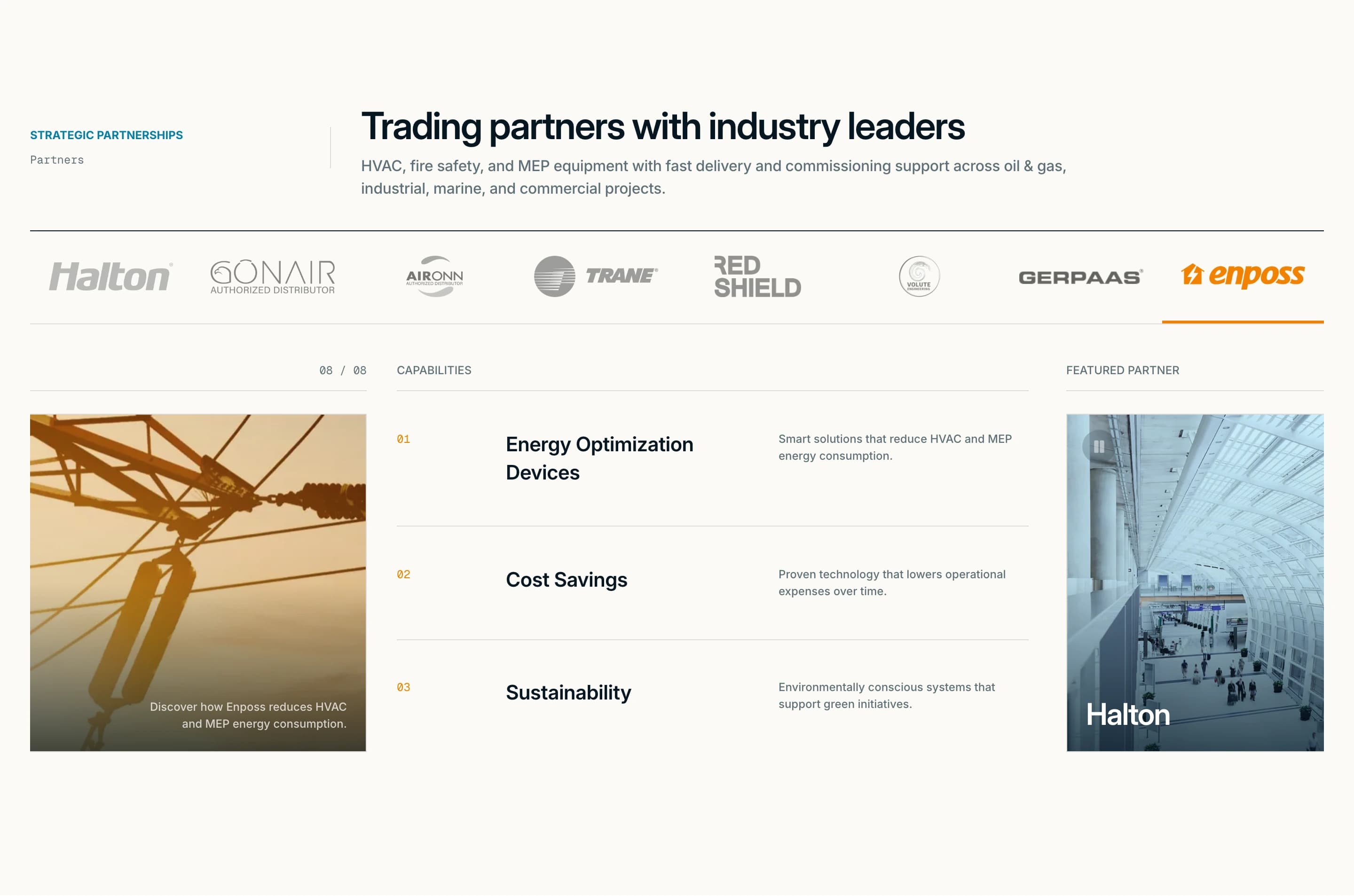
Argonaut supplies equipment and delivers the engineering around it, across oil and gas, defense, healthcare, marine, and infrastructure, partnering with manufacturers including Halton, Trane, Aironn, and Gonair.
The site had to do a specific job: convince a procurement engineer or consultant that this firm can be trusted with a large scope of work, then get them to a quote request quickly.
SEO and information architecture#
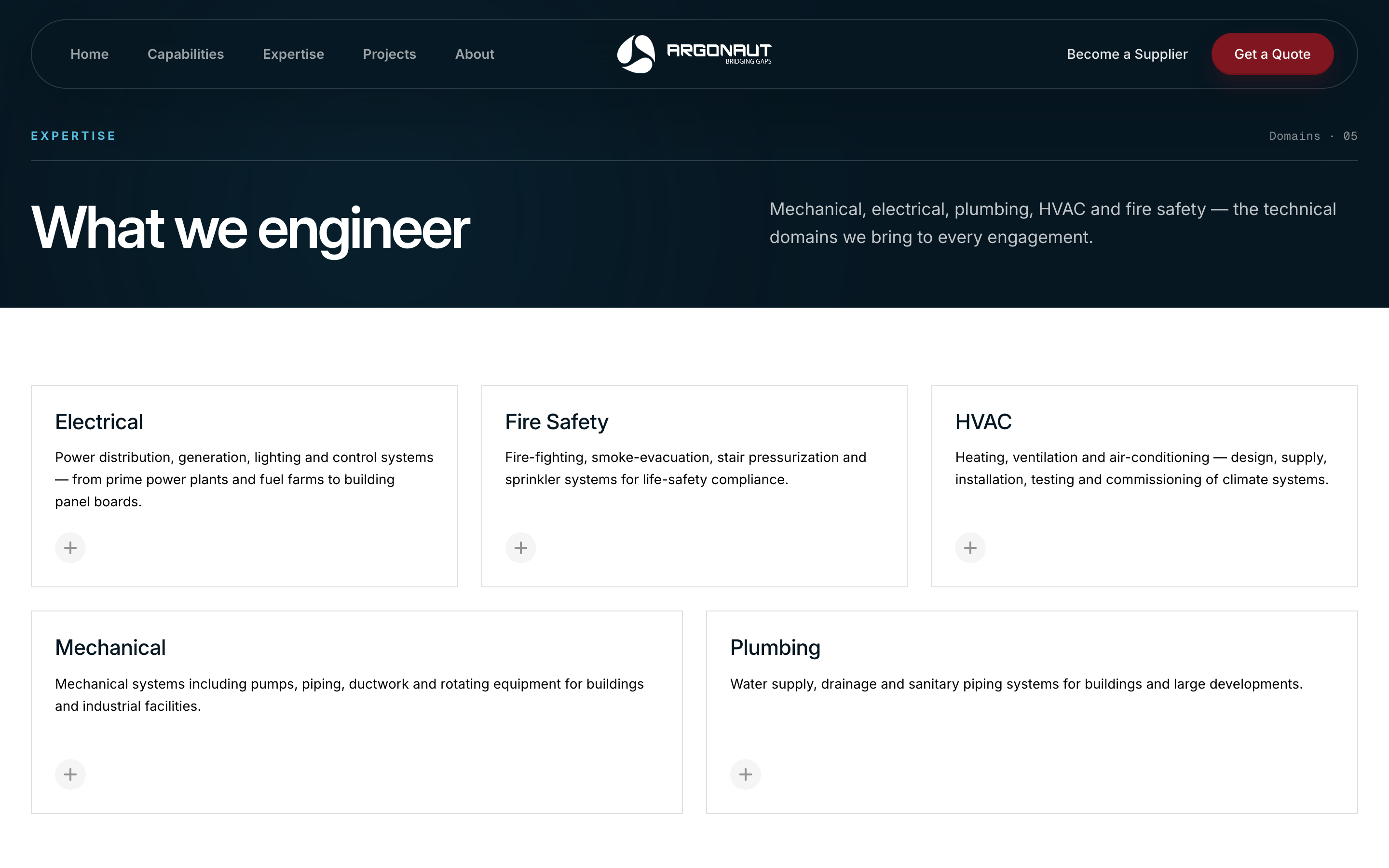
I led SEO strategy and information architecture for the site. The structure is built around how procurement buyers actually search, which is rarely by company name. They search by capability, by sector, and by manufacturer.
So the IA is cut along those axes: expertise domains (electrical, fire safety, HVAC, mechanical, plumbing), capabilities (engineering and design, procurement, installation, maintenance, trading), and sectors served. That gives real content depth on the terms that matter while keeping every page a short path to a quote request.
The CMS#
The site is backed by a custom CMS the Argonaut team uses directly. Projects, articles, suppliers, clients, and the partner manufacturer list are all editable content rather than hardcoded pages, which is what keeps a portfolio site from going stale six months after launch.
The design constraint was that the editors are engineers and commercial staff, not content people. Every field had to be obvious enough that nobody needs a manual, and structured enough that the published page stays on-brand no matter who filled it in.
Design#
Designed end to end in Figma. The visual language is deliberately restrained and technical: the audience is evaluating competence, not being sold to, so the site reads closer to a capability statement than to a brochure.